How Big Is a 9kg Washing Machine? Size & Dimensions
Explore the typical dimensions of a 9kg washing machine—width, height, and depth. Learn how capacity translates to footprint, how to fit a unit into tight spaces, and tips for choosing models that align with your laundry area.


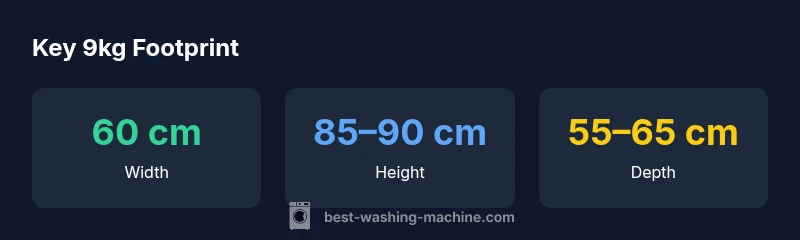
A typical 9kg washing machine footprint is about 60 cm wide, 85–90 cm high, and 55–65 cm deep. Many models use around 60 cm floor space, with extra room around the sides for airflow, hoses, and access to the drain. Always check exact spec sheets. Consider measurement for door swing and installation clearance as you compare models.
Understanding 9kg Capacity and Footprint
From a consumer perspective, the 9kg designation primarily reflects the dry laundry capacity a washer is designed to handle. It does not directly dictate its physical footprint, which is governed by the machine type (front-load vs top-load), control panel placement, and whether the unit is HE (high-efficiency) or standard. According to Best Washing Machine, the distinction between capacity and footprint is a common source of confusion for buyers. A 9kg machine can be a sizable front-load with a compact depth, or a taller top-load, which affects where it fits in your space. When evaluating models, cross-check the capacity rating with precise external dimensions on the spec sheet and compare across several brands to understand what “9kg” looks like in practice. For homes with tight widths or narrow doorways, consider models advertised as compact or space-saving solutions. In short, the capacity is one thing; the footprint is another—and both should be considered together for a happy fit in your laundry.
- Real-world loading varies by fabric type; bulky items like towels and bedding may fill capacity quickly.
- The “9kg” label applies to dry laundry; actual washed weight may differ after considering moisture content and fabric type.
- Always verify the model’s exact width, height, and depth before purchase.
Typical Dimensions You Can Expect
Most 9kg front-loading machines share a common footprint: about 60 cm in width, 85–90 cm in height, and 55–65 cm in depth. Front-load units tend to be tall and slim, making them a good fit for tall, narrow laundry nooks. Top-load 9kg variants usually present similar widths but can be taller or deeper depending on drum configuration and lid design. In practice, the vast majority of 9kg machines fall within the following ranges:
- Width: 60 cm (± a few cm depending on model)
- Height: 85–90 cm for front-load, 90–100 cm for some top-load designs
- Depth: 55–65 cm for standard installations; deeper footprints appear with certain top-load configurations
Remember that “typical” does not guarantee universal fit. Always pull the model’s official spec sheet and allow space for hoses, venting, and door clearance. If you’re installing in a tight alcove, measure the available space in three dimensions and compare it to the lowest-tolerance dimensions published by the manufacturer. A few centimeters can make the difference between a perfect slide-in and a snug obstruction.
How to Fit 9kg Machines in Small Spaces
Fitting a 9kg washer into a smaller laundry space requires careful planning. Start by measuring the width, height, and depth of the intended installation area. Add at least 2–5 cm of clearance on all sides to accommodate hoses, air circulation, and future maintenance. If your space includes a cabinet or an alcove, take into account door swing: some models open from the side, others from the top, which will influence where you place the appliance relative to surrounding fixtures. Consider a pedestaled option or a compact 9kg variant if vertical space is limited. Check if there is a laundry vent or drain line nearby and ensure there is a straightforward path to the standpipe. Finally, confirm the electrical outlet location and cord length so you don’t strain connections when installing the unit. Planning with precise measurements reduces post-purchase surprises and ensures smooth operation over time.
Front-Load vs Top-Load: Does 9kg Exist in Both?
Yes, 9kg capacity exists in both front-load and top-load formats, but their footprints differ noticeably. Front-load 9kg machines typically sit around 60 cm wide, 85–90 cm tall, and 55–65 cm deep, with the drum opening from the front and a lower profile that fits under countertops. Top-load 9kg machines can be wider or deeper depending on lid design and agitation system, and they may stand taller, sometimes requiring more vertical space. Front-loads generally offer better water efficiency and gentler handling for delicate fabrics, while top-loads can be easier to load for some users and may offer quicker wash cycles. When choosing between formats, consider not just capacity, but accessibility, floor space, and the likelihood of vibrations that can affect mounted cabinets or neighboring rooms.
How to Read Specs: Key Measurements and Clearances
Understanding the spec sheet is essential before purchase. Look for width (W), height (H), and depth (D) measurements, usually given in centimeters. Then verify installation clearances on the sides and back as recommended by the manufacturer. Some models require a minimum 1 cm clearance on the sides for airflow, while others specify 2–5 cm for heat dissipation. Don’t forget about door clearance—the distance the door or lid needs to swing open. If the washer will be placed next to a wall or cabinet, you may need a slightly wider opening than the posted width. Additionally, confirm the service clearance behind the machine to accommodate hoses and venting. Finally, cross-check the energy label and water usage per cycle to gauge long-term operating costs and environmental impact.
Practical Buying Tips for 9kg Models
When shopping for a 9kg machine, start with the footprint first. Make sure the unit fits the available space with comfortable clearance for hoses and door swing. Then evaluate efficiency: HE models often use less water and energy per cycle, which can lower operating costs over time. Review the drum design (stainless steel vs. porcelain) and consider cycle variety, spin speed options, and noise levels—particularly if the washer is near living spaces. If you share a wall with a bathroom or kitchen, check vibration ratings and anti-vibration feet to minimize disturbances. Finally, compare warranty terms and service accessibility in your area to avoid unexpected repair costs down the line.
Common Pitfalls and How to Avoid Them
Avoid assuming that a given capacity automatically means a perfect fit. Always confirm the exact external dimensions and door clearance. Beware oversized pedestals that push the footprint beyond the available space. Do not overlook hose lengths and the proximity to the standpipe; inadequate hose length can complicate drainage. Finally, avoid models with incompatible electrical requirements for your space—check voltage, plug type, and circuit capacity before purchasing. By verifying dimensions, clearances, and installation needs, you reduce the risk of a return or costly installation adjustments.
Common 9kg model footprints by type
| Model Type | Width | Depth | Height |
|---|---|---|---|
| Front-Load (9kg) | 60 cm | 60–70 cm | 85–90 cm |
| Top-Load (9kg) | 60 cm | 50–65 cm | 90–100 cm |
| Compact 9kg variant | 60 cm | 55–65 cm | 85–90 cm |
FAQ
What does a 9kg capacity mean in practice?
The 9kg rating refers to the maximum dry laundry weight the drum can handle. Real-world loads vary by fabric; bulky items like towels can fill capacity quickly. Always verify the model’s capacity in the spec sheet and test with typical loads.
9kg means the washer can handle about nine kilograms of dry clothes per cycle. Real-world loads vary by fabric and bulk; test with your typical laundry.
Will a 9kg washer fit in a tight laundry closet?
Measuring width, height, and depth is essential. Add 2–5 cm clearance on each side for hoses and airflow. If space is extremely tight, consider a compact 9kg variant or stackable options where available.
If you’re tight on space, measure carefully and allow a few centimeters of clearance. Look for compact or stackable 9kg models.
Are there 9kg top-load models?
Yes, 9kg top-load models exist but are less common than front-load options. Check the manufacturer’s capacity rating and explicit external dimensions to ensure fit and performance.
Yes, there are 9kg top-load options, but they’re less common. Always verify dimensions and capacity.
Do 9kg washers use more water?
Water use depends on the model and cycle. High-efficiency (HE) 9kg machines typically use less water per cycle than older standard models. Compare per-cycle water usage on the energy and water label.
Water use varies; HE models usually use less per cycle than older ones. Check the label for exact figures.
What installation clearance is needed?
Manufacturers specify side and back clearances to allow hoses and ventilation. Expect 1–5 cm clearance in typical installations, with more space if mounted in a tight alcove or near cabinets.
Most units need a few centimeters of clearance on the sides and back for hoses and airflow.
“For 9kg machines, the key is to match the footprint to your space while validating the model's actual load capacity and door clearance.”
The Essentials
- Measure space before buying to ensure fit.
- Check width, height, and depth in product specs.
- Factor door swing and installation clearance into your plan.
- Compare HE models for energy and water use.
- Verify exact dimensions from the manufacturer before purchase.