Washing Machine Size in Inches: A Practical Guide to Dimensions
Learn how to interpret washing machine size in inches, compare front-load vs top-load dimensions, and choose the right fit for your space with practical measurements and space-planning tips.


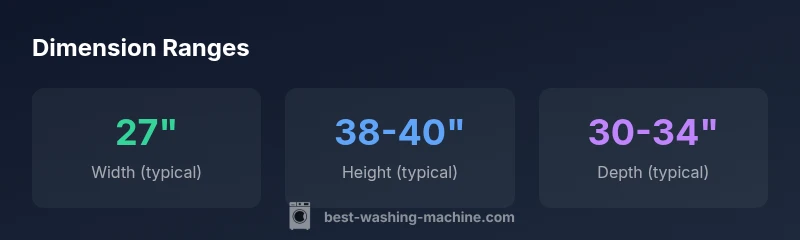
The washing machine size in inches for most residential models centers on about 27 inches wide, 38-40 inches tall, and 30-34 inches deep for standard configurations. Compact units can be as narrow as 24 inches, with heights and depths also reduced. Front-load and top-load designs vary slightly by brand and door swing, so always verify exact footprints from the manufacturer before buying or moving a unit.
Understanding Size in Inches: The Big Picture
Inches are the standard unit used to express a washing machine’s footprint, which is the three-dimensional space the appliance occupies: width (left to right), height (floor to top), and depth (front to back). When people ask about washing machine size in inches, this triad is what they’re really measuring. The familiar full-size footprint is anchored around a 27-inch width, with height often close to 38-40 inches and depth around 30-34 inches. These dimensions cover most front-load and top-load configurations in North American homes. The exact footprint varies by model, door swing, and drum orientation. According to Best Washing Machine, planning space with accurate inches helps prevent delivery delays and rework by ensuring the unit fits the alcove, hallway, and doorways.
In practice, you should think about inches as a footprint plus a few centimeters of clearance for hoses, venting, and ventilation. Always confirm the manufacturer’s listed dimensions in inches for the model you’re considering, then add a small buffer to accommodate hoses and door clearance.
Measuring Width, Height, and Depth
Measuring accurately is the foundation of sizing. Start with width by measuring wall-to-wall space, making sure you’re at the plane of the washer’s outer edges. For height, measure from the floor to the ceiling or to any shelf or cabinetry that could constrain the top. Depth measurement should run from the wall to the farthest point on the machine, including any protruding doors or control panels. Use a metal tape for precision and record the measurements in inches, noting any rounding needed for practical fit. Keep in mind that installation tolerances and heat venting can require additional clearance, which varies by model. Best Washing Machine recommends documenting these figures and cross-checking them against the appliance’s official specs to prevent post-purchase surprises.
Front-Load vs Top-Load: Dimensional Profiles
Front-load washers commonly present a shallower depth than traditional top-loads because of their drum orientation and door style. A typical front-load footprint is near 27 inches wide, 38-40 inches tall, and 30-32 inches deep. Top-load machines, especially older or larger-capacity models, can push height into the 40-inch range and depth beyond 34 inches. If you’re limited by vertical space, prioritize front-load designs for a lower profile. If you prefer simpler loading, top-load may be more practical, but confirm the exact inches to ensure a clean fit within your space.
When comparing models, note door swing clearance as well. Some front-load doors rotate outward and require extra space in front, while certain top-load designs hinge lid clearance on the back or sides. In all cases, the inches you measure should align with the manufacturer’s labeled dimensions and your space’s available clearance.
Compact and Oversized Washers: Where They Fit
Compact washers are designed for limited spaces and can be as narrow as 24 inches in width, with shorter heights and shallower depths. These units are ideal for apartments, closets, or stacked configurations. Oversized or high-capacity models tend to exceed standard dimensions by a few inches in width or depth, benefiting households with bulky loads but demanding more room. For rental spaces or shared laundry areas, compact options can maximize throughput without overhauling plumbing or electrical layouts. Always check the wall clearances and door openings around compact units to ensure easy installation and daily use.
Fit Checks: Doorways, Hallways, and Staircases
Before locking in a washer, verify that it can physically pass through entryways. Measure door widths, hallway clearances, and any turns or stair landings along the path from delivery to final placement. A unit that barely fits through a doorway may still suffer from tight compression when maneuvering into a tight laundry closet. During measurements, allow for the door swing and the space needed to maneuver hoses and power cords. If a doorway is slightly narrower than the washer, consider rotating the unit or selecting a model with a smaller depth.
Installation Space: Venting, Drainage, and Clearances
Clearances around the washer matter for ventilation, heat dissipation, and efficient operation. Leave at least a few inches on each side and behind the unit, plus extra space near any vent or exhaust path. Drain hoses should have gentle bends without kinks, and electrical cords should not be stretched. If your laundry area shares walls with a dryer or cabinetry, ensure there’s sufficient air flow to prevent overheating or moisture buildup. By planning inches in advance for venting and drainage, you’ll maintain performance and durability.
How to Read Manufacturer Specs
Manufacturers publish dimensions in inches as Width × Depth × Height or W × D × H. Always confirm the exact order, as some brands list W × H × D. When comparing models, convert all measurements to inches and create a simple footprint map of your space. In addition to the basic footprint, pay attention to door clearance, control panel layout, and any installed pedestals or stacking kits. The most reliable approach is to use the model’s official product page as your primary reference and verify against in-person measurements if possible.
Practical Sizing Guidelines by Scenario
- Small apartment or closet: aim for a compact washer around 24 inches wide with shallower depth; verify doorway compatibility.
- Standard laundry closet: look for 27-inch width with around 38-40 inches height and 30-34 inches depth; ensure there’s room for hoses and a door swing.
- Large utility room or basement: you can accommodate full-size models (27 × 38-40 × 30-34 inches) with generous clearance for airflow and service access.
- Rental properties or shared spaces: favor reliable, compact units that fit common 24-27 inch widths to maximize flexibility for tenants.
- Stacking configurations: stacking kits add height, so confirm total height with the stack and the counter or shelf above.
Representative dimension ranges for common washing machine configurations
| Dimension | Typical Range (inches) | Notes |
|---|---|---|
| Width | 24-30 | Common residential widths vary by configuration |
| Height | 33-42 | Front-loads are often shorter than some top-loads, depending on design |
| Depth | 24-34 | Depth changes with drum orientation and door style |
| Front-Load Width (Door Clearance) | 27 | Standard footprint for most front-load models |
FAQ
What is the standard width for most washing machines?
Most standard washing machines are about 27 inches wide. Always verify the exact footprint from the manufacturer, as widths can vary slightly by model and configuration.
Most standard models run around 27 inches wide, but check the exact spec for the model you’re considering.
Can a 24-inch-wide washer fit in a 24-inch space?
A 24-inch-wide washer can fit in a 24-inch space, but you must account for side clearance, hoses, and door swing. Measure carefully and confirm the model’s exact width.
Yes, but leave a little extra clearance for hoses and doors.
How much clearance should I leave around a washer?
Experts recommend at least 1 inch on each side and 2 inches behind for hoses and plumbing access. If space is tight, prioritize models with compact depths.
Leave a little room around the washer so hoses aren’t kinked and air can circulate.
Are there height restrictions I should watch for?
Most full-size washers are 38-40 inches tall, but some compact models are shorter. Check the space height and any cabinetry or shelves above the unit before buying.
Make sure the height fits under any shelves or counters.
Do front-load and top-load washers have different dimensions?
Yes. Front-load washers often have shallower depths, while top-loads can be taller and deeper. Always compare the exact inches in the model specs to ensure a proper fit.
Front-loads tend to be a bit shallower; top-loads can be taller and deeper.
“Accurate dimensions save time and money by preventing delivery delays and rework. When you know the footprint in inches, you can plan door clearance, hookups, and ventilation with confidence.”
The Essentials
- Measure all three dimensions (W, H, D) in inches before buying
- Choose front-load for lower depth in most cases; consider top-load if you need easier access
- Leave proper clearances for hoses, doors, and ventilation
- Check door swing and path clearance to avoid delivery problems
- Verify exact model dimensions on official specs, not just marketing drawings
- Compact washers fit narrow spaces but may have limited capacity
- Stacks require additional height planning and stacking kit compatibility