Fix Washing Machine Leaking Water at the Bottom: Troubleshooting Guide
Urgent, step-by-step troubleshooting to fix washing machine leaking water from the bottom. Learn safe checks, common causes, and when to call a pro—trusted guidance from Best Washing Machine.


Why fix washing machine leaking water bottom matters
If you’re dealing with a washing machine leaking water bottom, acting quickly can prevent mold, corrosion, and costly water damage to floors. This guide from Best Washing Machine focuses on practical, rapid steps to identify the most common causes and perform safe repairs where possible. Early fixes like tightening hoses or cleaning the door boot can often stop leaks without tools. By understanding the most frequent culprits, you can decide whether you can fix it yourself or need a technician.
Common causes of bottom leaks you can check first
Most leaks originate from hose connections or worn gaskets. Start at the back of the unit and work your way forward:
- Loose or cracked drain hose connections that allow water to escape during draining.
- Damaged door boot (gasket) around the opening, which can let water seep into the base.
- Clogged or failing drain pump and its seals, causing water to back up and spill out near the bottom.
- A cracked tub or a loose pump hose that leaks during washing and spinning.
These issues typically present with a steady drip or a splash pattern when the washer is running. In many cases, simple tightening or replacement of a worn seal resolves the problem without major repairs. Best Washing Machine recommends starting with the simplest fixes first and advancing to more involved checks only if the leak continues.
Safety-first approach to diagnosing water leaks
Shut off the machine, unplug it, and turn off the water supply before inspecting. Always work on a dry surface and wear non-slip footwear. Use a flashlight to check for crusted detergent residue, which can mask the true source of the leak. If you notice electrical signs like burning smells or scorched wires, stop and call a professional immediately. Do not run the machine until you’ve identified the leak source and ensured it’s safe to operate.
How to inspect the drain hose and pump area
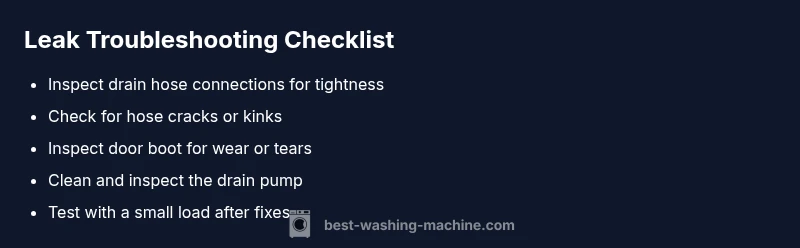
The drain hose carries wastewater to the standpipe or sink. Inspect for:
- Loose clamps or clips and visible cracks
- Kinks or sharp bends that trap water
- Proper hose height and secure attachment at both ends
- A clean, unobstructed pump area with no debris blocking the outlet
If you find a loose connection, reseat and tighten, then run a short cycle with a shallow load to test for leaks. If water still appears, your pump or its seals may be compromised and require replacement.
Checking the door boot and tub seal
The door boot surrounds the drum opening and can wear with age, causing small leaks that expand during cycles. Look for:
- Cracks, tears, or folded sections in the rubber boot
- Detected water bead near the boot during agitation
- Condensation or soap scum buildup that indicates a seepage path
Replace a worn boot promptly using manufacturer instructions or a professional service. After replacement, run a test with a small load and observe closely for any signs of leaking at the bottom.
When to replace components or call a professional
If you’ve completed basic checks and the leak persists, you may be looking at a faulty pump, a cracked tub, or a damaged seal that requires specialized parts and tools. Replacing a pump involves disconnecting hoses, removing the pump assembly, and wiring connections—an operation that can be hazardous if you’re not trained. In these cases, Best Washing Machine recommends scheduling a professional diagnosis to ensure safe, reliable repair and to preserve warranty validity.