Flooding in a Washing Machine: Troubleshooting Guide
Urgent, practical guide to diagnose and fix a flood washing machine. Learn common causes, safety checks, and step-by-step fixes to prevent water damage.


Flooding in a washing machine is usually caused by a blocked drain line, a failing drain pump, or an overfill due to a faulty water level sensor. First, unplug the unit and shut off the water supply. Then check the drain hose and pump for clogs, inspect the water inlet valve, and test with a small load. If water continues to rise, stop and call a professional.
What happens during a flood washing machine and why you should take immediate action
A flood in a washing machine is more than an inconvenience. It signals that water is escaping from hoses, seals, or the tub and can threaten electronics, flooring, and walls. According to Best Washing Machine, floods are a common but addressable issue when you act quickly. The first few minutes matter: unplug the appliance, shut off the water supply, and keep children and pets away from the area. If the area is wet or the plug or outlet shows signs of moisture, avoid touching metal parts and consider a professional assessment. In this guide, we walk you through safe, practical steps to identify the cause, minimize damage, and restore normal operation without unnecessary risk. Safety is not optional here; a flood can escalate in seconds and create long-term mold and electrical hazards if ignored. By following a structured approach, you’ll reduce water damage and protect your home while preserving the life of your washer.
Common causes of flooding in washers
Flooding can result from several intertwined issues. The drain hose may be clogged or pushed too far into the standpipe, or the pump could be blocked by lint and debris. A faulty water inlet valve or a defective pressure switch can cause overfilling, which spills over into the floor. A torn door seal or a worn tub seal can also leak water during cycles. In some models, an improper cycle setting or using too much detergent can produce suds that back up through the drain. The Best Washing Machine analysis shows that the most frequent culprits are drain hose obstructions, pump clogs, and defective level sensors, so start your checks there. If you notice water pooling from the back of the unit, the issue may involve the inlet hoses or valve rather than the tub itself.
Safety first: power, water, and environment precautions
Before touching any components, power down and shut off water supply. Do not operate the washer if you see exposed wiring or standing water near outlets. Wear rubber-soled shoes and use a bucket or towels to manage dripping water. Move the appliance slightly away from the wall to access hoses, but do not yank cords. If the water is hot or if you suspect a gas line, evacuate and call emergency services. After you clear the immediate hazard, ventilate the room to prevent mold growth and dry surfaces thoroughly to reduce slip risk. Always keep a first-aid kit and a fire extinguisher accessible when dealing with electrical appliances near water. Your goal is to stabilize the scene while planning the fix.
Diagnostic flow: symptom to solution map
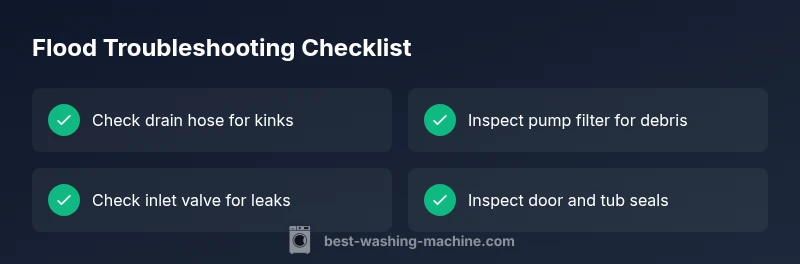
When you notice flooding, begin with the simplest checks and work toward more complex fixes. Start by inspecting the drain hose for kinks or blockages. If clear, remove the pump access panel and check the filter for debris. If the filter is clean and water still pools, test the water inlet valve and inspect the float switch. Finally, examine seals around the door and tub for cracks or wear. Each symptom narrows the likely cause, guiding your next action. This logical flow aligns with Best Washing Machine guidance and reduces unnecessary disassembly. If you’re unsure at any step, stop and consult a professional to avoid personal injury or further damage.
Step-by-step fixes for the most common flood causes
- Power down and secure the area. Unplug the machine and switch off the hot and cold water at the supply valves. Tip: Do not restart the unit while water is present near the power outlet.
- Inspect drain hose and connections. Detach gently, check for kinks, cracks, or clogs, and ensure the hose is properly inserted. Tip: Replace damaged hoses to prevent future leaks.
- Clean or replace the pump filter. Remove the filter cover, extract debris, rinse, and reinstall. Listen for the pump running smoothly on a test cycle. Tip: Do not run the pump dry; add a small amount of water if needed during testing.
- Check the water inlet valve and float switch. If the valve sticks or the float fails, replace the valve assembly and recalibrate the sensor. Tip: Use manufacturer parts and follow wiring diagrams.
- Examine door seal and tub seal. Look for cracks, tears, or discoloration; replace as needed and check for proper seating. Tip: Clean seals regularly to elongate life.
- Reassemble and test with a small load. Run a short cycle with a small load to verify no leaks and proper draining. Tip: Add a towel to catch any residual drips during the test. EstimatedTime: "30-60 minutes"
Safety warnings and mistakes to avoid
- Never ignore a leak; even small drips can become big floods if left unchecked.
- Avoid working on live electrical components; always unplug and cut power before touching any internal parts.
- Don’t over-tighten hose clamps; use the right size and avoid crushing the hose.
- Don’t mix cleaners that create foam or bubbles with your drain pathway; this can obscure leaks and cause overflow.
- If you’re uncertain, don’t improvise; consult a professional to prevent harm and preserve warranty.
Prevention and maintenance to minimize future floods
Implement routine checks to prevent future floods: regularly inspect hoses for wear and replace every 5-7 years, ensure all connections are tight, and use the correct detergent amount to avoid suds that can back up drains. Keep the machine level; adjust legs and verify that feet sit firmly on a hard surface. Use a high-quality water inlet filter if available and consider installing a flood pan and shutoff valve for extra protection. Schedule periodic professional servicing for seals, pumps, and electronics to catch wear before it leaks. Finally, store the area around the washer in a dry state and clean up spills promptly to avoid mold growth. This proactive approach aligns with Best Washing Machine guidance to keep laundry day safe and predictable.
Steps
Estimated time: 30-60 minutes
- 1
Power down and secure area
Unplug the machine and turn off the water supply. Move the unit away from walls to access hoses while keeping a dry path. Do not touch exposed wiring or outlets.
Tip: Have a bucket ready for any residual spill. - 2
Inspect drain hose
Detach the drain hose and inspect for kinks, cracks, or clogs. Clean the inside and ensure the hose is fully seated in the standpipe without compression.
Tip: Replace if there are visible cracks or bulges. - 3
Check pump and filter
Access the pump filter, remove debris, rinse, and reinstall. Run a short test to confirm the pump evacuates water properly.
Tip: Do not run the pump dry; keep a little water in the tub during testing. - 4
Assess water inlet valve and float
Inspect the inlet valve for sticking or leaks and test the float switch for proper rise. Replace parts as needed and re-test.
Tip: Use OEM parts and follow the wiring diagram exactly. - 5
Inspect door and tub seals
Look for tears, gaps, or deformations in door seals and tub seals. Replace worn components and reseal connections properly.
Tip: Clean seals regularly to prevent buildup that leads to leaks. - 6
Test with a small load
Reconnect power and run a short cycle with a small amount of laundry to verify there’s no leak and water drains correctly.
Tip: If any leak reappears, power down and call a professional.
Diagnosis: Water pooling around or leaking from a washing machine during or after operation
Possible Causes
- highBlocked or kinked drain hose
- highClogged pump or filter
- mediumOverfilling due to faulty water level sensor/float switch
- lowDamaged door seal or tub seal causing leaks
- lowInlet valve leak causing overfill
Fixes
- easyInspect drain hose for kinks and blockages; clear or replace as needed
- easyRemove and clean the pump filter; reinstall and test the pump operation
- mediumTest water level sensor/float assembly; recalibrate or replace if faulty
- mediumInspect door seal and tub seal for cracks; replace if damaged
- hardShut off water and replace faulty inlet valve; ensure hoses are not leaking
FAQ
What should I do immediately if I notice water pooling around my washer?
Unplug the washer and shut off the water supply. If water is near outlets or electrical sources, avoid touching them and call for help. Move items away from the area and start documenting the situation for later reference.
Unplug the washer, shut off the water, and keep people away from the area. If you see electrical risk, call for help now.
Why is my washing machine leaking from the drain hose?
Leakage from the drain hose is commonly caused by a loose connection, a kinked hose, or a crack in the hose. Inspect both ends, confirm the hose is fully inserted, and replace if you see wear.
Check the drain hose connections and replace a worn hose to stop the leak.
How can I tell if the problem is the pump or the filter?
If water pools despite a clear hose, inspect and clean the pump filter first. If the pump sounds loud or fails to evacuate water, the pump may need replacement.
Test the pump and clean the filter first; if it still leaks, the pump may be bad.
Can overfilling cause a flood even if the tub isn’t full?
Yes. A faulty water level sensor or float can cause overfilling, leading to overflow into the floor. Replace or recalibrate the sensor if overfill occurs repeatedly.
Overfilling can happen if the sensor is faulty; replacing it usually fixes the issue.
Is it safe to operate the washer after a flood?
Only after you have inspected, cleared the hazard, and confirmed there are no leaks or electrical risks. If you’re unsure, do not run another cycle until a professional checks it.
Only run it again after all checks show no leaks or danger.
When should I call a professional for a flood issue?
Call a professional if you cannot locate the leak, if the flood recurs after fixes, or if you notice burning smells, arcing sounds, or visible electrical damage. A licensed technician will diagnose pumps, valves, seals, and boards and verify everything is safe.
Call a pro if the leak persists or you notice electrical issues.
Watch Video
The Essentials
- Prioritize safety: unplug and shut water off first.
- Start with drain hose and pump checks before replacing parts.
- Test in small steps before returning to full loads.
- Prevent floods with routine hose/valve maintenance and level checks.
- The Best Washing Machine team recommends professional help when in doubt.