LG OE Code: Urgent Troubleshooting Guide
Learn how to diagnose and fix LG OE overflow/drain errors quickly. Quick fixes, step-by-step diagnostic flow, and safety tips from Best Washing Machine.


OE on LG washers signals an overflow/drain error. It appears when the tub holds water that cannot drain properly, triggering an overflow condition. The quickest fixes are to inspect the drain hose and pump filter, verify the pump runs, and ensure the inlet valve isn’t introducing water during drain. If the error continues, professional service may be required.
What OE Means for LG Washers
On an LG washer, the OE error (often displayed as OE on the screen) is an overflow/drain fault. It usually means the machine detected more water than it can safely drain or purge during a cycle. When this happens, the washer may halt mid-cycle to prevent leaks, and in some cases, the door may lock as a safety precaution. According to Best Washing Machine, the OE code is a drain-related warning that requires urgent attention to prevent flooding or further damage to internal components. If you’re staring at the lg code oe washing machine indicator, you should act quickly to identify whether the problem is a simple blockage or a failing pump. Acting fast reduces the risk of water damage and costly repairs later.
Common Causes of OE
OE typically boils down to drainage problems, though sensor or valve issues can trigger the code. The most likely culprits include a clogged drain hose or filter, a malfunctioning drain pump, a kinked or blocked drain hose, or a valve that continues to allow water into the tub during the drain cycle. Less common but possible causes include a failed water level sensor, a faulty control board, or wiring faults that confuse the machine’s sensors. Identifying the root cause quickly depends on a structured check of the drainage path from tub to drain.
Quick Fixes to Try Before Testing Components
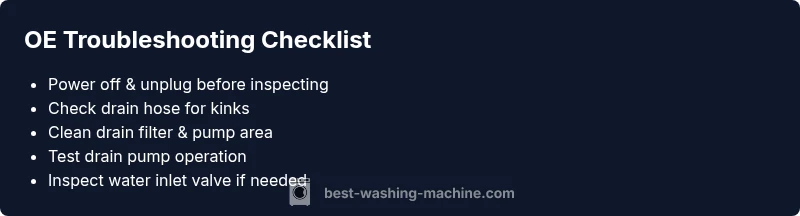
Start with simple, safe actions that do not require tools. First, power off the unit and unplug it for at least 60 seconds to reset. Reconnect and run a short rinse with no clothes to see if water drains normally. Inspect the drain hose for kinks or restrictions; straighten any bends and ensure the hose is elevated above the floor to prevent siphoning. Open the access panel (if present) and remove the drain filter or coin trap, then clean out lint, hair, and debris. A clogged filter or hose is a very common cause of the OE error and is often resolved with a thorough cleaning. If the hose and filter are clear and the unit still reports OE, move on to testing the drain pump.
In-Depth Diagnostic Notes to Narrow Down Causes
If quick fixes don’t resolve the OE code, you need a more careful diagnostic. Start by manually draining any standing water from the tub using the built-in drain cycle, if available. Listen for the drain pump operating during a cycle; a humming pump might indicate a seized impeller or a blocked pump. Check the drain pump filter and impeller for obstructions. Inspect the drain hose for any blockage, water creep, or improper routing that could trap air and prevent proper drainage. Finally, consider sensor-related issues—unplugging and reseating the control board connections or replacing a faulty water level sensor may be necessary if the pump appears fine but the tub still won’t drain.
Safety, Prevention, and When to Call a Professional
Safety is paramount with electrical appliances. If you see water pooling around the machine or if you smell burning plastic, discontinue use and seek professional service immediately. Do not disassemble high-voltage components unless you are trained. When to call a pro: if the OE error recurs after cleaning the hose and filter, if you hear grinding from the pump, or if you notice water leaks that you cannot trace to a simple hose issue. A professional diagnosis typically includes inspecting the drain pump, wiring, and the control board. Expect service costs to range depending on the region and the exact part failure, with common drain-pump replacements typically in the mid-to-upper range and pump-filter replacement often being cheaper.
Preventing OE in the Future
To reduce the chance of OE recurring, practice regular maintenance: inspect the drain hose for kinks, clear the pump filter monthly or after every heavy wash, load clothes evenly, and avoid forcing large items through the drum. Use the correct detergent amount and avoid foreign objects entering the drum. A slow, steady drain clearing routine minimizes clogs and keeps the pump functioning smoothly.
Steps
Estimated time: 30-45 minutes
- 1
Power down and unplug
Unplug the washer and wait 60 seconds before re-plugging to reset the control board. This simple reset can clear transient faults that mimic OE.
Tip: Always unplug before accessing internal components. - 2
Access the drain filter
Locate and remove the drain or lint filter. Place a shallow tray beneath to catch water. Remove blockages with your fingers or a soft brush.
Tip: Keep a towel handy for any residual water. - 3
Clear the drain hose
Disconnect the drain hose from the pump or standpipe. Clear any kinks and use a long flexible brush or running water to remove debris.
Tip: Ensure the hose is free of obstructions and reattach securely. - 4
Test the drain pump
With the hose disconnected, manually run a drain cycle to hear whether the pump runs and water is expelled. If you hear grinding or no flow, the pump may be faulty.
Tip: Do not touch moving parts while testing. - 5
Inspect the water inlet valve
If the tub fills during drain attempts, test whether water is entering during the drain phase. A valve stuck open can cause an OE-like condition.
Tip: Only test if you’re comfortable with wiring and valve access. - 6
Re-test the cycle
Reassemble everything and run a short wash with a light load to confirm that the OE code does not reappear. If the error persists, escalate to a professional repair.
Tip: Document any error codes to aid the technician.
Diagnosis: OE error on LG washer with standing water in the tub
Possible Causes
- highClogged drain hose or filter
- mediumDrain pump failure or blockage
- lowWater inlet valve feeding water during drain cycle
Fixes
- easyClean the drain filter and check/straighten the drain hose
- mediumInspect the drain pump for blockages or failure and replace if needed
- hardTest the water inlet valve and related wiring; replace if stuck open or defective
FAQ
What does OE mean on an LG washing machine?
OE stands for an overflow/drain error. It signals the machine detected water that it cannot drain properly within the cycle. Addressing drainage issues quickly helps prevent floods and further damage.
OE on an LG washer means an overflow/drain error. It points to drainage problems that should be checked promptly to prevent leaks.
Is OE always related to the drain hose?
Not always. While drainage issues are the most common cause, OE can also be triggered by a clogged pump, a faulty water inlet valve, or a malfunctioning level sensor. A systematic check should cover all possibilities.
Usually it’s the drain hose or pump, but it can also be a sensor or valve problem. Check all parts if the hose and pump look okay.
Can OE occur with a small load?
Yes, an OE can occur with small or unbalanced loads if the sensor misreads water level or if the drain path is blocked. Focus on the drainage path first regardless of load size.
Yes, it can happen with small loads if the system misreads water level or drains slowly.
How much does it cost to fix OE?
Costs vary by region and the faulty component. A typical diagnostic visit ranges from the low to mid hundreds for parts and labor, with drain-pump replacement commonly in the mid-range, and sensor or board repairs at higher costs.
Diagnostics plus part replacement can range from moderate to high, depending on the part needed and service call fees.
Should I replace the drain pump myself?
Only if you are confident with appliance wiring and safety. A failed pump can flood areas around the washer; otherwise, call a pro to avoid further damage.
If you’re not comfortable with electrical work, call a technician.
Is OE covered under warranty?
Warranty coverage depends on the model and terms of your warranty. If the unit is still under warranty and the failure isn’t caused by user damage, a repair or replacement may be covered.
Check your warranty terms; some failures may be covered if still within the warranty window.
Watch Video
The Essentials
- Identify OE as an overflow/drain issue quickly.
- Prioritize drain hose and filter checks first.
- Reset and test the pump before replacing parts.
- Call a pro if the OE returns after fixes.
- Prevent future OE with regular maintenance and proper loads.